
Modern Landscape Design Ideas for Colorado Homes

A beautiful Colorado yard has to do more than look good in June. It needs to handle intense sun, spring snow, dry stretches, shifting temperatures, and the everyday rhythm of life at home. For many homeowners in the Denver Metro area, that means moving beyond a basic lawn and foundation shrubs toward a more thoughtful, more functional outdoor plan.
Modern landscape design for Colorado homes blends clean lines, water-wise planting, durable materials, and outdoor spaces that feel comfortable through changing seasons. A front yard can become more welcoming with layered plants and natural stone. A backyard can become a true living space with patios, garden beds, shade, and planting zones that support privacy and curb appeal.
The best results come from planning before installation. When layout, materials, drainage, irrigation, and plant choices work together, the yard feels intentional rather than pieced together over time.

Design with Colorado’s climate in mind
Colorado landscape design starts with climate awareness. Along the Front Range, outdoor spaces face strong sun, low humidity, drying winds, heavy clay soils in many areas, and seasonal swings that can be hard on plants and hardscape materials.
A modern design should respond to these conditions instead of fighting them.
Key climate factors to plan for include:
Sun exposure South- and west-facing areas often receive intense afternoon heat. These spaces may need drought-tolerant plants, shade structures, or materials that do not become overly hot underfoot.
Snow and freeze-thaw cycles Patios, walkways, retaining walls, and edging should be built with proper base preparation and materials that can handle seasonal movement.
Water conservation Denver Metro homeowners often want landscapes that use less water without looking sparse. Smart plant selection, efficient irrigation, and mulch all help.
Microclimates One property can have several growing conditions. A protected courtyard, a windy side yard, and a shaded north-facing bed may each need a different planting plan.
This is one reason thoughtful landscape design in Denver matters. A design that works well in a wetter or milder region may struggle in Colorado. Choosing suitable plants and materials from the beginning helps create a yard that is easier to maintain and more enjoyable over time.
Create a front yard that feels clean, welcoming, and water-wise
A modern front yard does not need to be stark or overly minimal. The goal is often balance: clean structure, seasonal interest, and a warm arrival experience.
Start by thinking about how people move through the space. A clear walkway, visible entry, and layered planting can make the home feel more inviting. If the existing front yard is mostly turf, replacing some or all of it with planting beds, gravel, stone, or groundcovers can reduce water use while adding texture.
Modern front yard ideas that work well in Colorado include:
Curved or geometric walkways made from natural stone, concrete pavers, or large-format slabs
Planting beds with ornamental grasses, hardy perennials, and evergreen structure
Gravel or stone mulch in areas where organic mulch may blow away or break down quickly
Boulders used as natural focal points
Low retaining walls that manage slopes and add planting opportunities
Drip irrigation for shrubs, perennials, and raised beds
A small seating area near the entry or porch
A strong front yard design has rhythm. Instead of using one of everything, repeat a few reliable plants through the space. Repetition helps the yard feel calm and designed, while still allowing variety through bloom times, heights, and textures.
For a modern look, keep plant palettes focused. Pair upright grasses with rounded shrubs. Use low groundcovers near walkways. Mix evergreen plants with perennials that change through the seasons. This creates visual interest even when some plants are dormant.

Turn the backyard into an outdoor living space
Backyards are no longer just leftover space behind the house. With the right plan, they can support dining, relaxing, gardening, entertaining, and quiet time outdoors.
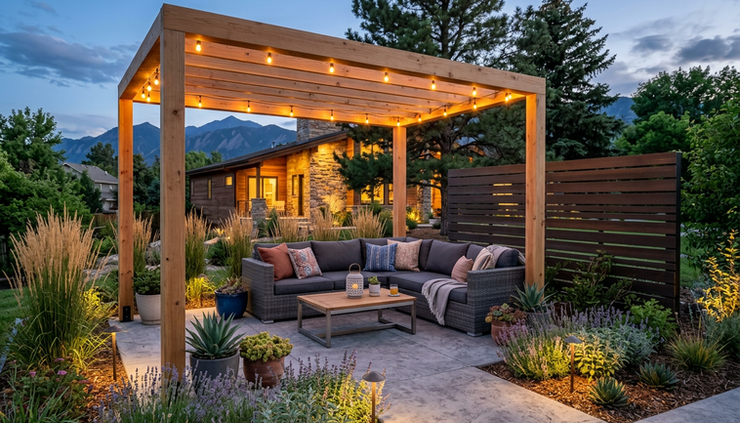
Good backyard design begins with zones. A patio may serve as the main gathering area. Raised garden beds may sit where sunlight is strongest. A fire feature may anchor a lounge space. Planting can frame views, soften fences, and create privacy without making the yard feel closed in.
Build a patio that fits how the space will be used
A contemporary patio should match the scale of the home and the way the household lives. Too small, and furniture feels cramped. Too large, and the space may feel exposed or disconnected from the planting.
Popular patio materials for Colorado homes include:
Material | Why it works well | Design note |
Concrete pavers | Clean lines and many size options | Works well for modern layouts |
Natural stone | Timeless texture and regional character | Choose stone suited for freeze-thaw conditions |
Poured concrete | Simple, durable, and flexible | Saw cuts can create a modern grid |
Gravel seating areas | Informal and permeable | Best with solid edging and a compacted base |
A patio should also connect well to the home. Consider how people will carry food outside, where shade falls in the afternoon, and how the space looks from inside. A patio seen from the kitchen or living room becomes part of the daily view.
Add shade, lighting, and comfort
Outdoor living design is about comfort as much as appearance. Colorado sunshine can be intense, especially in exposed backyards. A pergola, shade sail, umbrella, or strategically placed tree can make a patio more usable.
Lighting also changes how a yard functions. Path lights, step lights, and warm low-voltage fixtures can improve safety and extend evening use. The best lighting feels subtle. It highlights movement and texture without turning the yard into a spotlight.
Comfort can also come from enclosure. A low wall, built-in planter, hedge, or screen can make a patio feel like an outdoor room. This is especially useful in neighborhoods where homes sit close together.
Include raised garden beds with intention
Raised garden beds are practical and attractive when they are planned into the design rather than added as an afterthought. They define growing areas, improve access, and can make vegetable or herb gardening easier to manage.
For Colorado homes, raised beds should be placed where they receive strong sun, have access to water, and do not block circulation. Materials should complement the rest of the yard. Metal, cedar, stone, or composite systems can all work, depending on the design style and maintenance preferences.
Keep enough room around beds for walking, kneeling, and carrying tools. A beautiful garden bed becomes frustrating if it is hard to reach.

Use xeriscaping and native plants without losing softness
Xeriscaping is often misunderstood. It does not mean covering the yard with rock and a few lonely plants. A strong xeriscape design uses water wisely while still creating color, movement, shade, and habitat.
In Colorado, xeriscaping can include:
Native and adapted perennials
Ornamental grasses
Low-water shrubs
Groundcovers
Efficient drip irrigation
Mulch that protects soil moisture
Reduced turf in areas where lawn is not needed
The key is hydrozoning, which means grouping plants by water needs. Plants that need more frequent watering should be placed together. Very low-water plants should have their own zones. This allows irrigation to support the plants without wasting water.
A modern xeriscape can feel lush when it uses layers. Tall grasses add movement. Flowering perennials bring seasonal color. Evergreen shrubs provide winter structure. Stone, gravel, and boulders give the design shape even when plants are dormant.
Common plant qualities to look for include:
Tolerance for dry conditions once established
Suitability for the property’s sun exposure
Cold hardiness for the local zone
Strong root systems
Seasonal interest through flowers, seed heads, foliage, or form
Native plants can be a strong choice because many are adapted to regional conditions. Adapted non-native plants can also work well when selected carefully. The goal is not to follow a rigid formula. The goal is to build a plant palette that suits the site, the desired style, and the amount of care the homeowner wants to provide.
A thoughtful xeriscape design can reduce maintenance demands over time, but new plants still need care while they establish. Even drought-tolerant plants need proper watering at first.
Plan planting layouts for function, not just decoration
Planting design should solve problems. It can guide movement, frame an entry, screen a view, cool a patio, stabilize a slope, soften hard edges, and create privacy.
Before choosing plants, define what each planting area needs to do.
A few practical layout ideas include:
Place taller shrubs or ornamental grasses where privacy is needed
Use low plants near walkways and driveways to keep sightlines clear
Add evergreen structure near the front entry for year-round presence
Use flowering perennials where they can be seen from patios or windows
Plant trees where future shade will improve comfort
Keep thorny or spreading plants away from narrow paths
Leave mature spacing so plants are not crowded in a few seasons
Scale matters. Tiny plants can disappear against a two-story home or large fence. Oversized plants can overwhelm a small patio. A good design considers mature size, not just how plants look at the nursery.
Seasonal change also matters in Colorado. A planting layout should not rely only on summer flowers. Bark, seed heads, evergreen foliage, grasses, and branching structure all help carry the design through fall and winter.

Avoid common landscaping mistakes before they become expensive
Many landscape problems begin with good intentions and poor sequencing. Installing a patio before planning drainage, buying plants before understanding sun exposure, or adding irrigation after planting can lead to extra work later.
Common mistakes to avoid include:
Starting with plants instead of a plan Plant shopping is enjoyable, but plants should support the layout, not define it by accident.
Keeping lawn where it is not useful Turf can be valuable for play, pets, or cooling, but unused lawn often consumes water and maintenance without adding much function.
Using too much rock Rock mulch can be useful, but large areas of exposed rock may increase heat and make a yard feel harsh. Mix stone with plants, shade, and organic textures.
Ignoring drainage Patios, walkways, walls, and planting beds all need proper water movement. Poor drainage can damage hardscape and stress plants.
Choosing plants only for bloom color A strong plant palette also considers size, texture, water needs, hardiness, and winter interest.
Forgetting maintenance access Narrow side yards, utility areas, gates, hoses, trash storage, and snow removal paths should all be part of the design.
Installing features in isolation A fire pit, deck, patio, or garden bed should connect to the overall layout. Otherwise, the yard can feel cluttered.
Planning helps prevent these issues. It also allows homeowners to phase installation wisely. A full yard transformation does not always need to happen at once, but the pieces should follow a shared vision.
Why planning before installation makes the yard better
A landscape plan acts like a road map. It shows where patios, paths, planting beds, trees, irrigation, lighting, and outdoor living areas belong before materials are ordered or construction begins.
This matters because outdoor spaces are connected. A patio affects drainage. A tree affects shade. A walkway affects planting bed shape. Irrigation affects plant health. When these elements are designed together, the finished space feels cohesive.
A good plan can help answer questions such as:
Where should people gather, walk, garden, and relax?
Which areas need privacy or screening?
What parts of the yard receive the most sun or wind?
How much lawn is truly useful?
Which materials fit the home’s architecture?
Where should water-wise planting replace high-water areas?
How can the project be phased without creating rework?
For homeowners in the Denver Metro area, professional planning can be especially helpful because climate, soil, exposure, and water use all influence the design. Serenity Spaces Design Studio helps homeowners think through these choices before installation begins, so the yard can be both beautiful and practical.
Bring modern Colorado landscape design into everyday life
The best modern yards feel effortless, but they rarely happen by accident. They come from smart decisions about layout, materials, plants, water, and how the space will be used through the seasons.
For Colorado homes, that often means reducing unused lawn, adding durable patios and paths, choosing native and drought-tolerant plants, designing with water conservation in mind, and creating outdoor living areas that feel comfortable and connected to the home.
A well-designed landscape can improve curb appeal, make the backyard more useful, and create a calmer outdoor environment for daily life. It can also help avoid costly changes by making key decisions before installation begins.
If you are planning a front yard refresh, a complete backyard design, a xeriscape design, or a more functional outdoor living space, contact Serenity Spaces Design Studio for personalized landscape design services in the Denver Metro area. A thoughtful plan is the best place to start.


Comments